Scaling Laws
A downloadable game for Windows
An accelerator bought on the day it launches is worth about half of what you paid, that same day.
It loses another quarter every time a better one ships. Nobody tells you this at the point of sale, and by the time it shows up in your books the decision is two years old. That is the game.

Scaling Laws starts on 1 January 2022.
Twelve million dollars, no product, no team, and eleven months before the world finds out what any of this is for. You run a frontier AI lab through the four years that followed, against fourteen labs that wait, rush and drift on their own schedule rather than reacting to your score.
YOU ARE NOT BUYING UPGRADES, YOU ARE TIMING THEM
Twenty-two hardware generations carry their real ship dates, launch prices, boardpower and on-package memory.
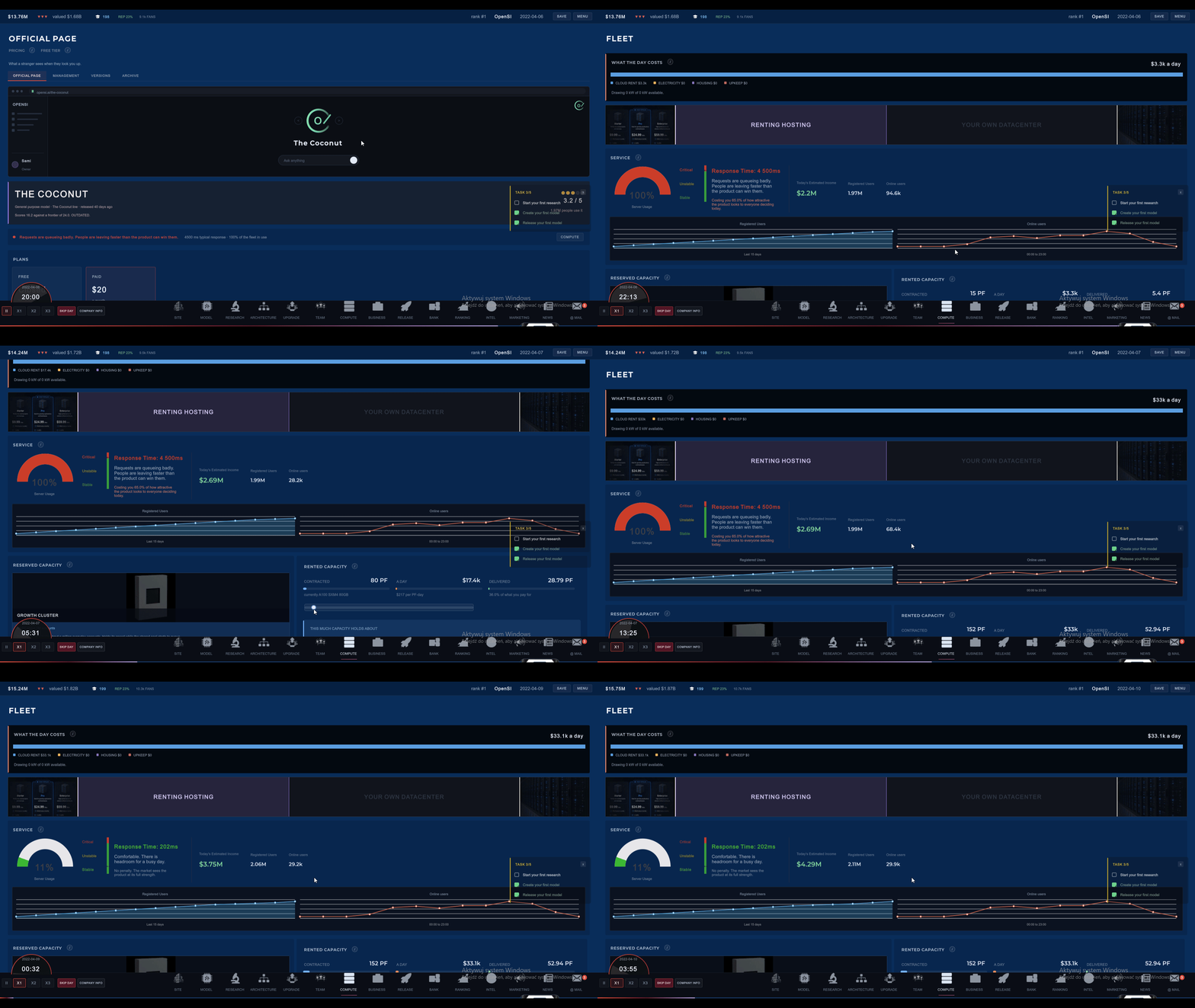
Rent compute at cloud prices that lag the market by a hundred and eighty days and own nothing, or buy at roughly a third of the cost per FLOP and absorb the loss yourself.
There is no guaranteed profit anywhere in it. Price per token falls by about half a year. Demand saturates. A company that ships one model and coasts is insolvent inside three years, and an automated test fails the build if that stops being true.
A REGULATOR JUDGES WHAT YOU HAD SWITCHED ON, NOT WHAT YOU LEARNED SINCE
A serious safety incident does not fine you. It opens a file, says nothing has been decided, and puts a banner across the top of whatever screen you are looking at. Five days later the verdict is rolled against the protections that model shipped with.
The outcome was decided either way. The five days are the point. They are the difference between a hard game and an arbitrary one. Researching better protections next year does not retroactively harden something you released today. Everything in the safety stage buys a smaller chance of something rather than a bigger number, which is the hardest kind of value to see and the easiest to skip. That is the mistake it exists to punish.
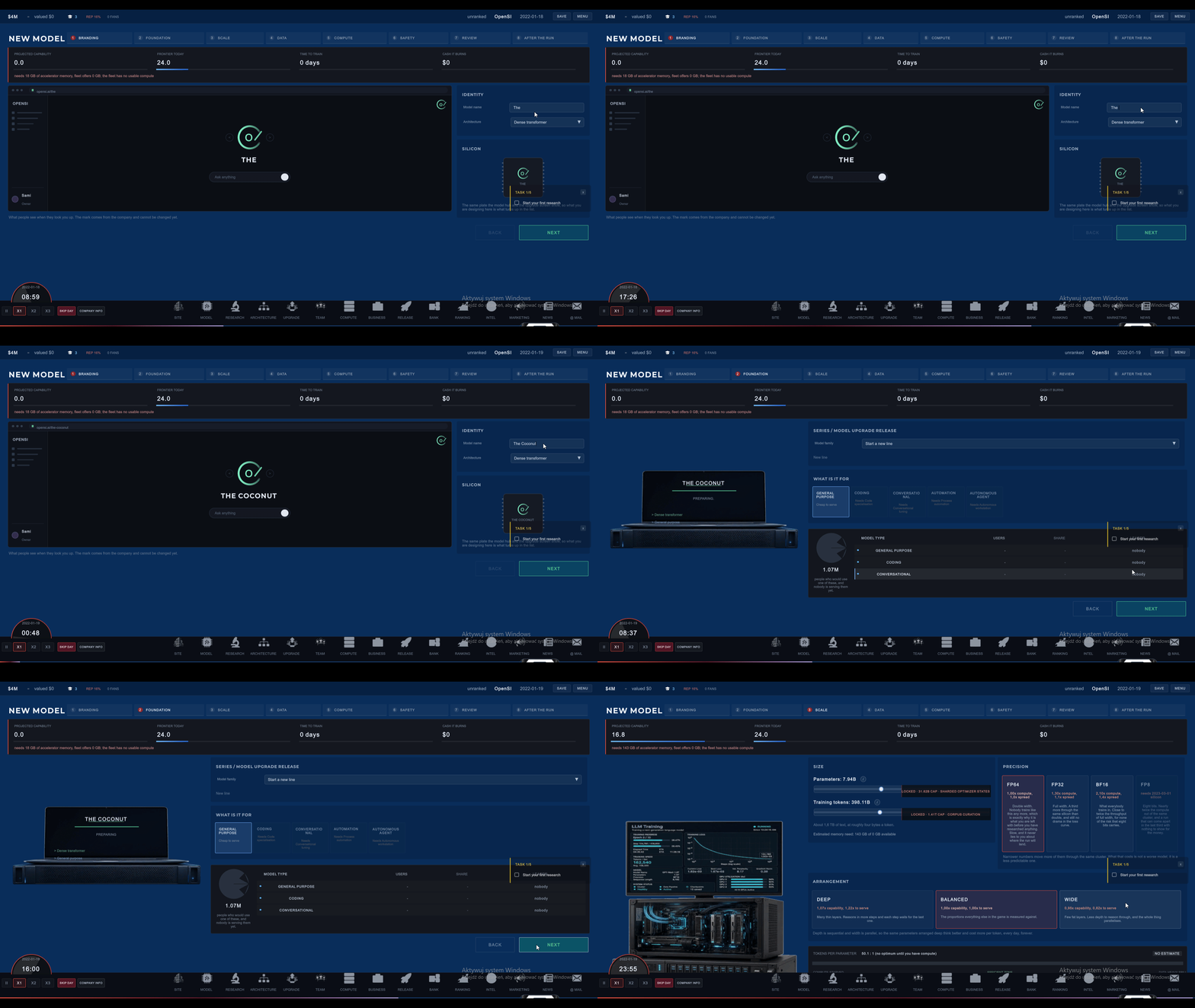
Scaling Laws - AI Model Creation Stages - Marcin HCK Firmuga
SEVEN CARDS BEAT EIGHT
Fill a server cabinet completely and the heat throttles everything in it. Swap one accelerator for a fan and the same cabinet delivers more, because a rack's rating is what it sheds unaided and cooling is paid for in compute rather than only in money. Cabinets do not age. Chips get hotter. A room you filled in 2023 and never went back to is quietly losing you throughput by 2027 without you having touched anything, and the fix costs a slot.
MONEY IS NOT WHAT GATES SCALE
A two-person company in January 2022 cannot schedule a trillion-parameter run however much cash it has. The parameter slider stops halfway and research moves it, through four rungs, to the full range.
The lock lives in the simulation rather than on the slider, because a cap that exists only in the interface is a suggestion the moment there is a second way to commit. The slider keeps its full length and covers the locked part, naming the node that would open it, so you can always see how far the ceiling is from where you are standing.
Fifty research nodes across four eras and three tracks. Money is a bad gate because money compounds. A node also costs calendar, and calendar cannot be compounded away.
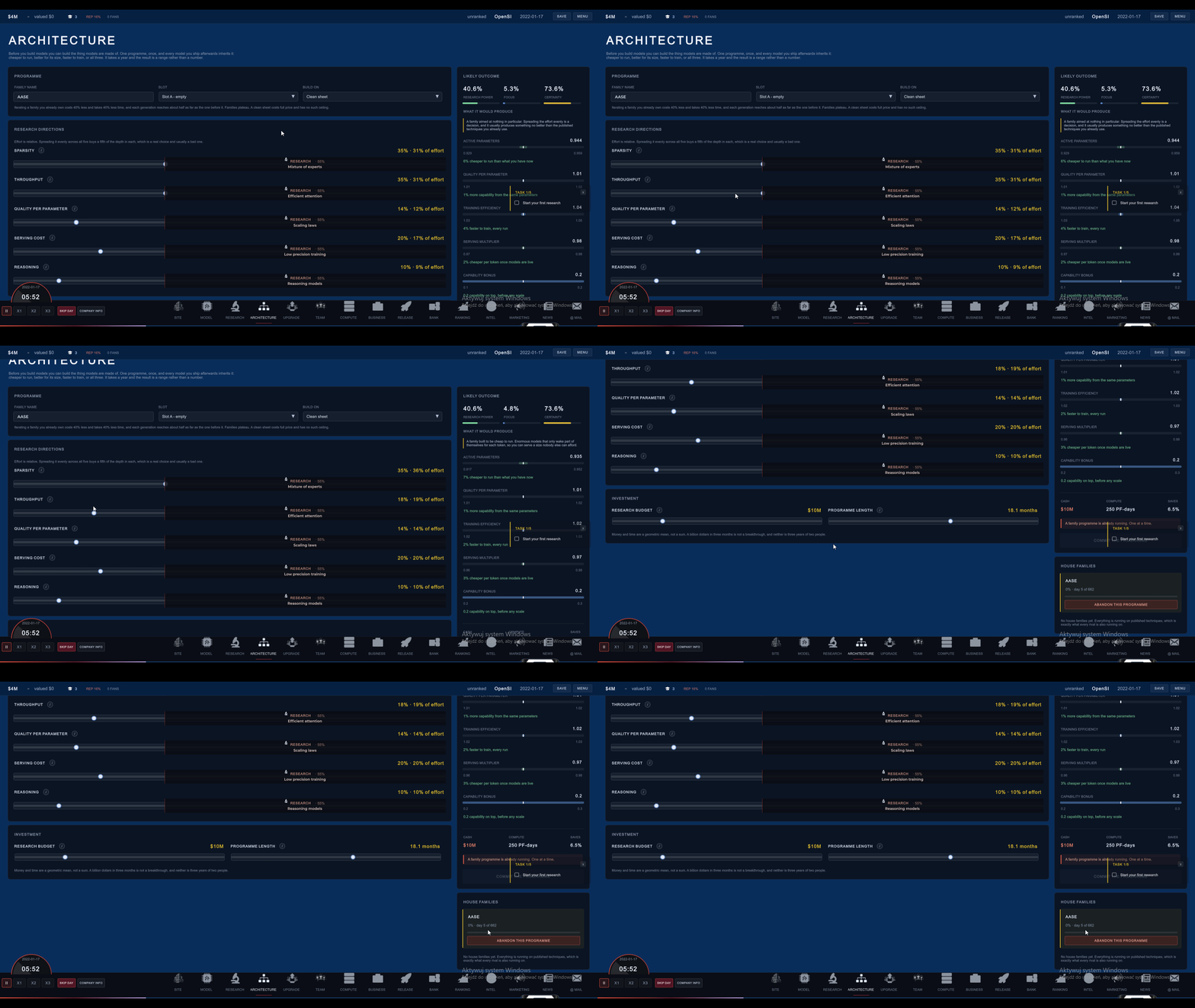
THE REST OF WHAT YOU DO
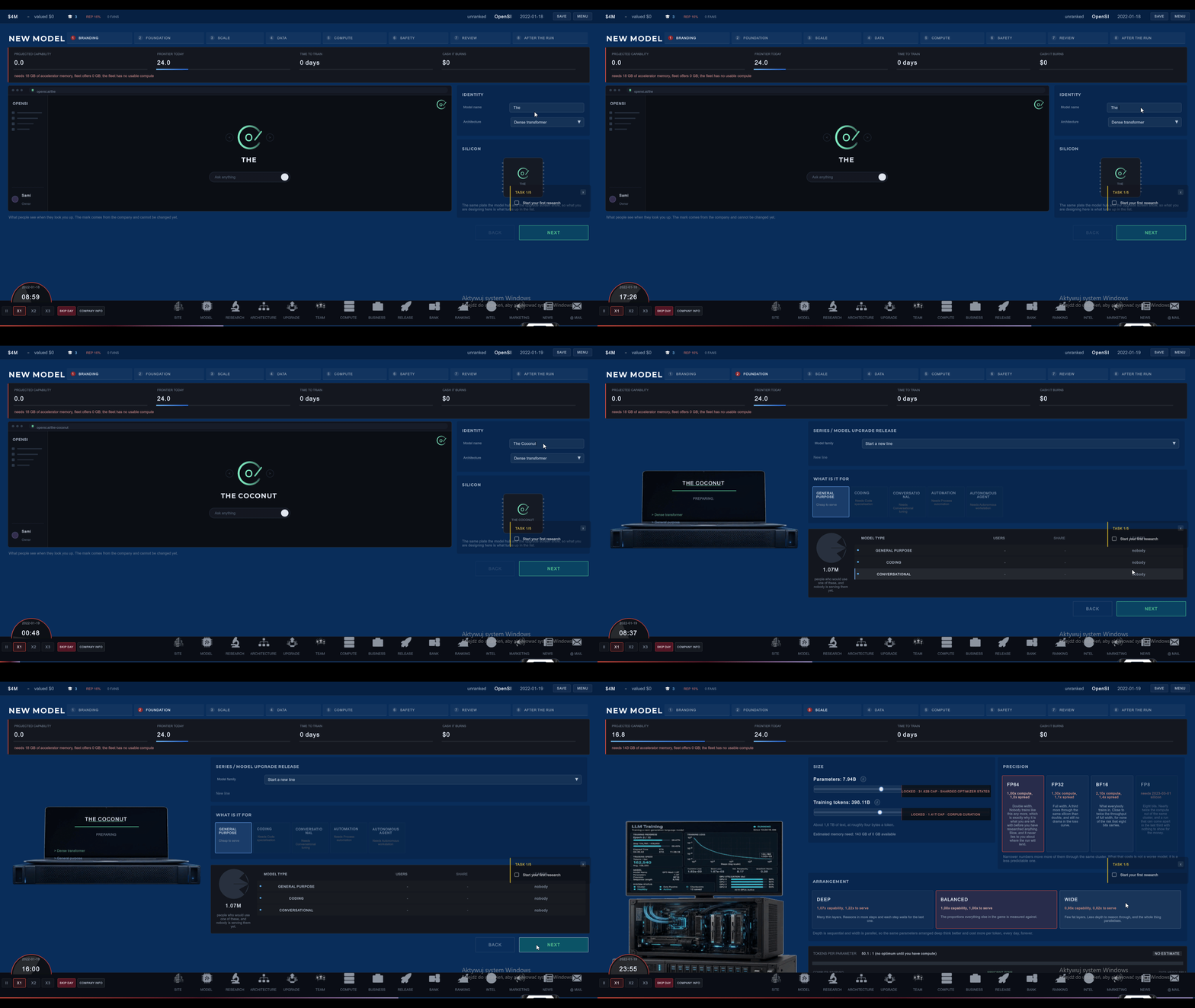
Design a model in eight stages. Branding, foundation, scale, data, compute, safety, review, and what happens after training.
The scale page decides most of the outcome: parameters against tokens, on a logarithmic belt so half of optimal and twice optimal sit the same distance from the middle. Hire through three channels.
A contract board, a state employment register that has not been redesigned since 2009, and a headhunter who charges whether or not the candidate signs. Every candidate has a hidden reservation wage, so you negotiate against a number you cannot see and their face tells you warm or cold without telling you the figure.
Borrow money that separates its two costs honestly. An instalment repays the loan and ends. A commission is rent for holding the facility, pays nothing off, and runs through the grace period.
One number for both means nobody can plan. Sell into five audience segments with a market that remembers. Users move over time rather than snapping to whoever released last, and enterprise customers do not come back quickly once they leave.
Every audience also weighs the option of buying nothing at all, because an enterprise in 2022 was not choosing between vendors.
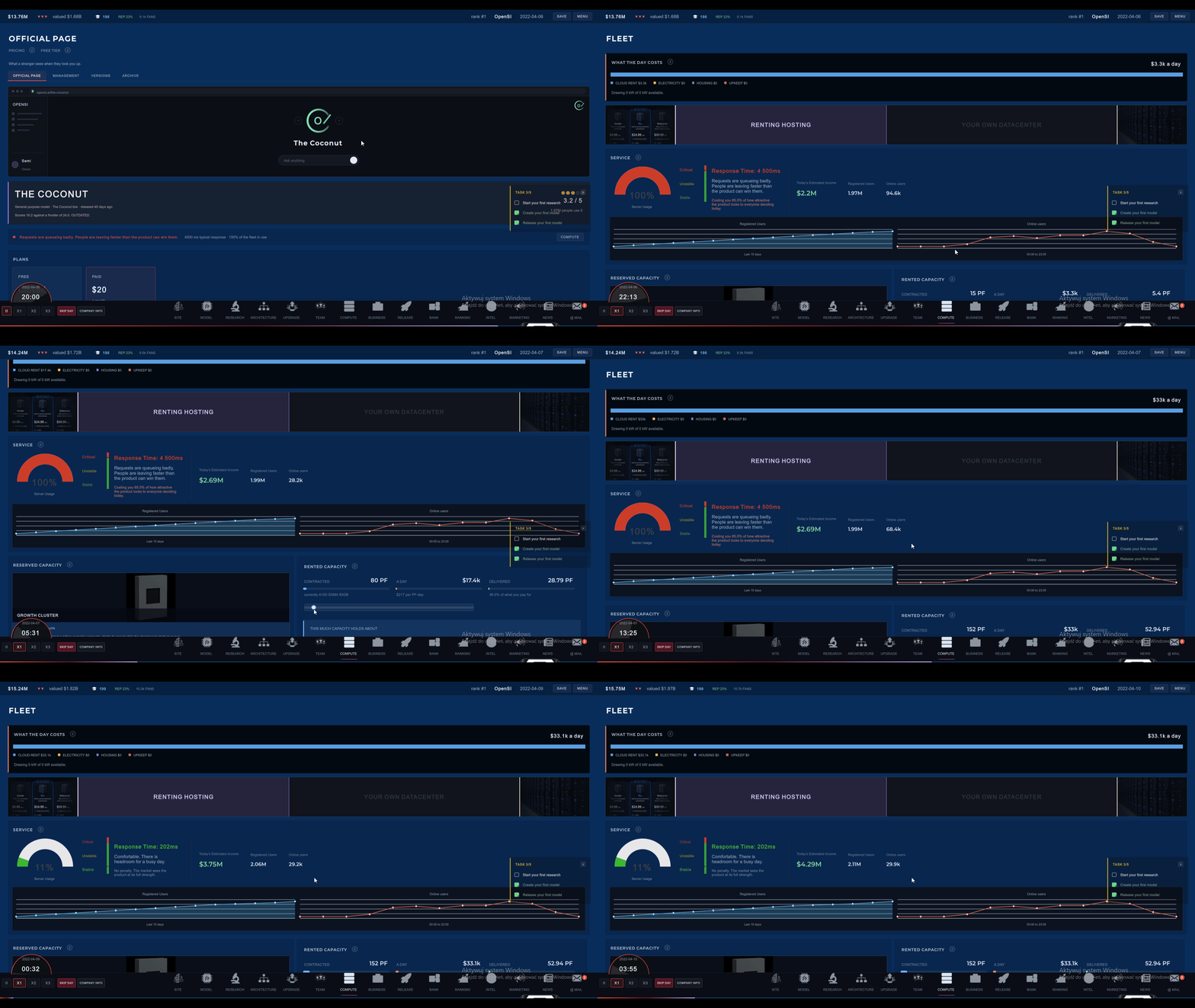
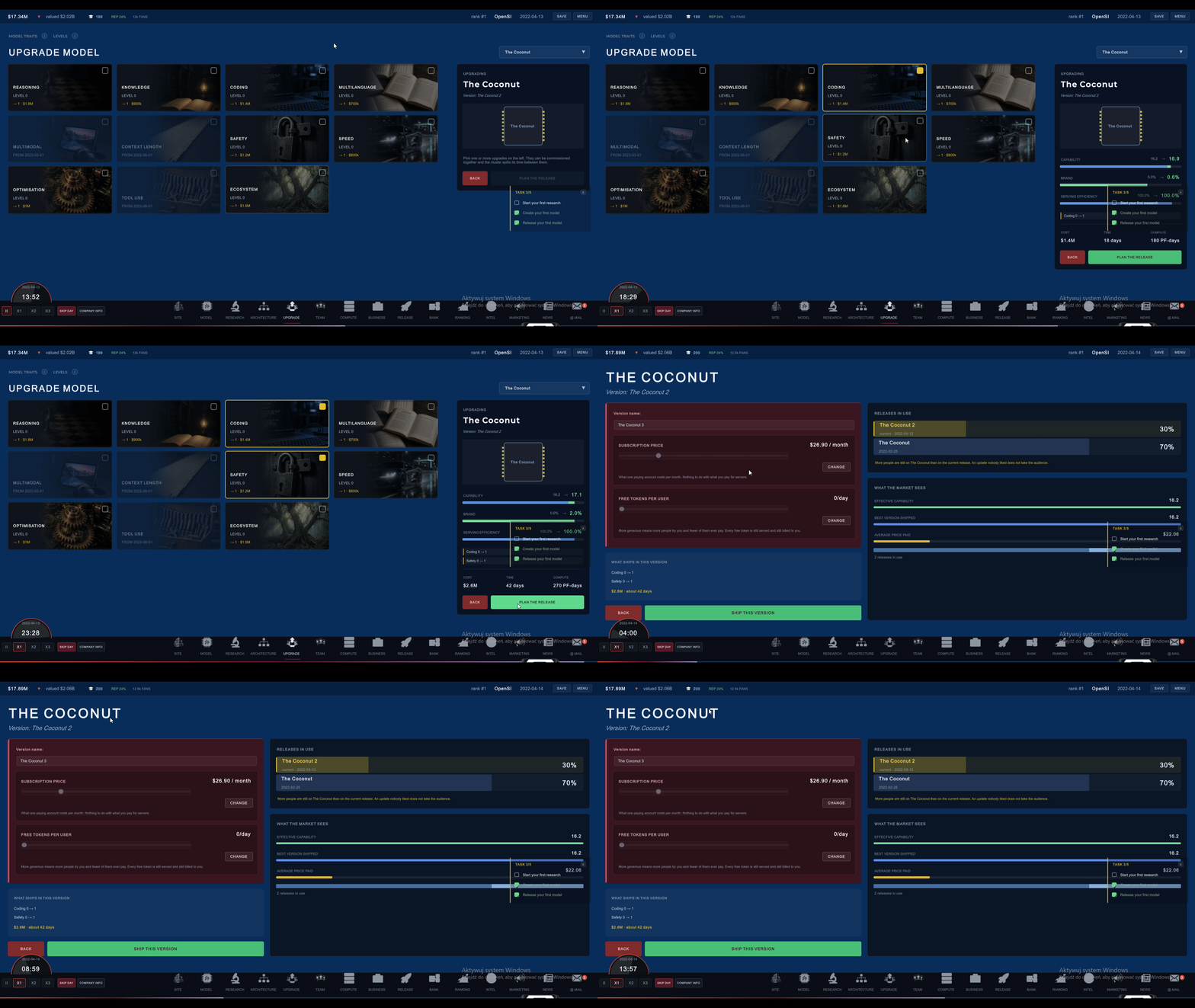
SHIPPING AN UPDATE DOES NOT MOVE EVERYBODY ONTO IT
Release a new version and a quarter of your users take it on day one. The rest drift across at twelve per cent of the remaining gap per day, and if the new version is worse they never come.
What the market thinks of you is what your users are running, not the best thing you ever shipped.
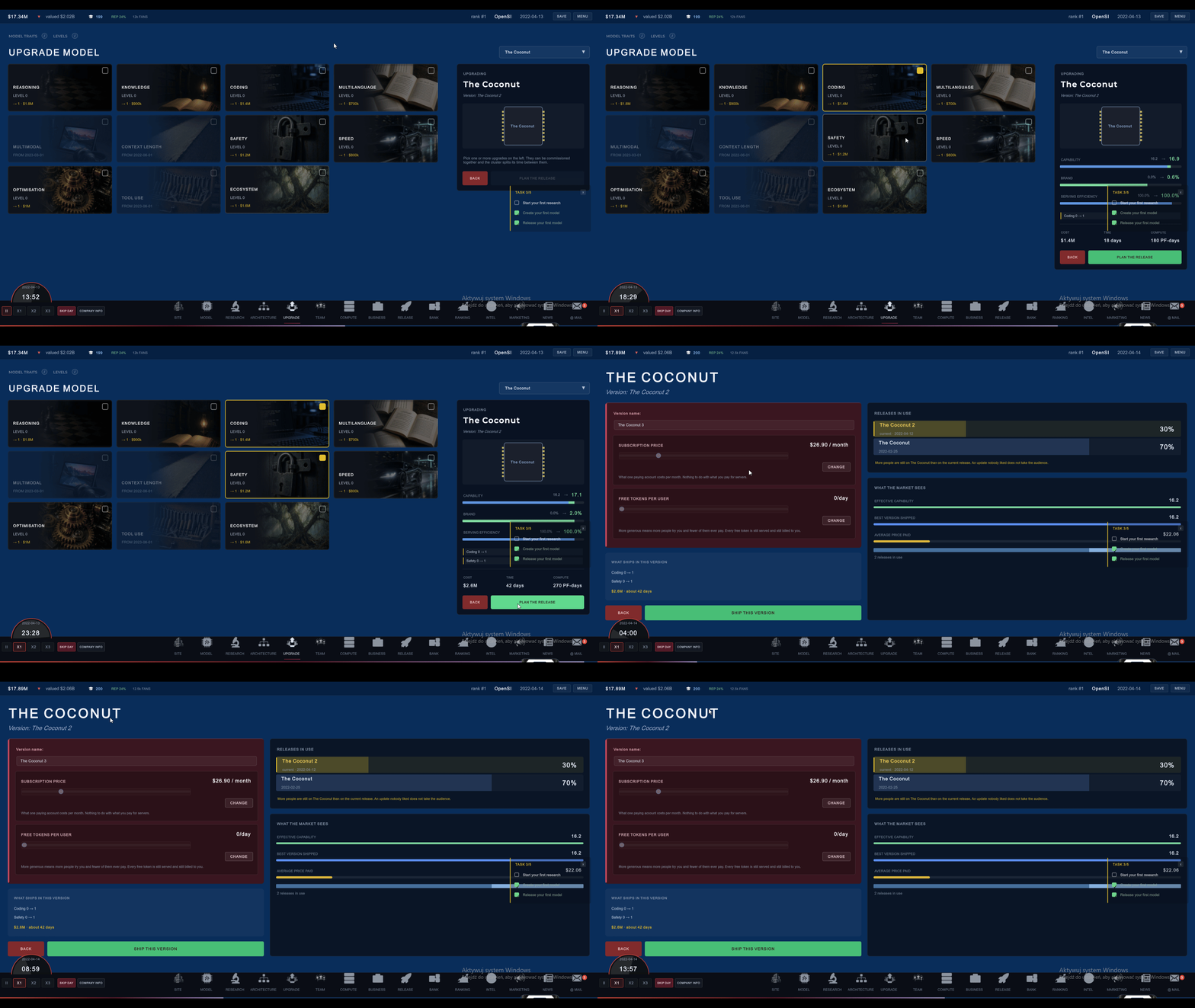
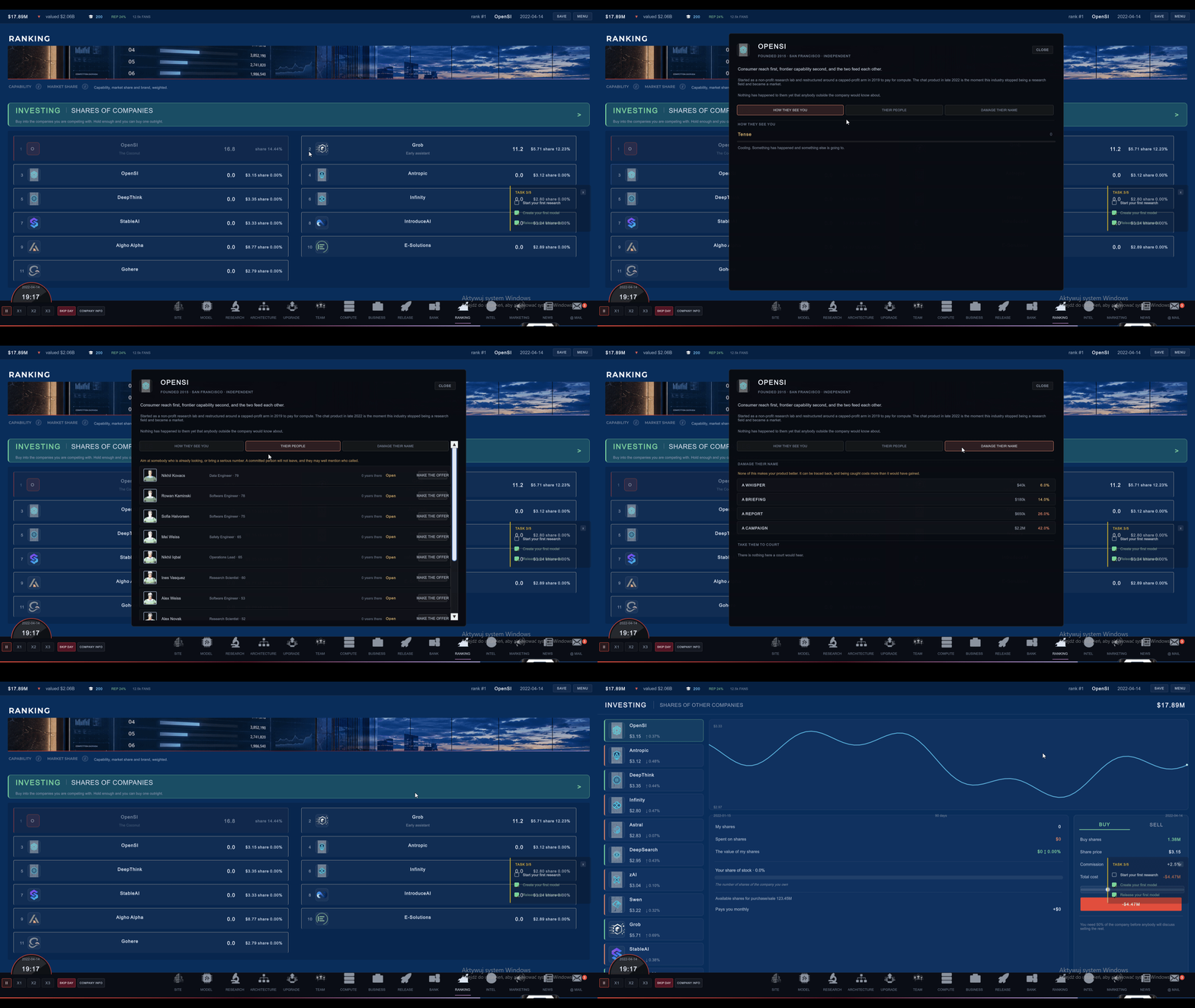
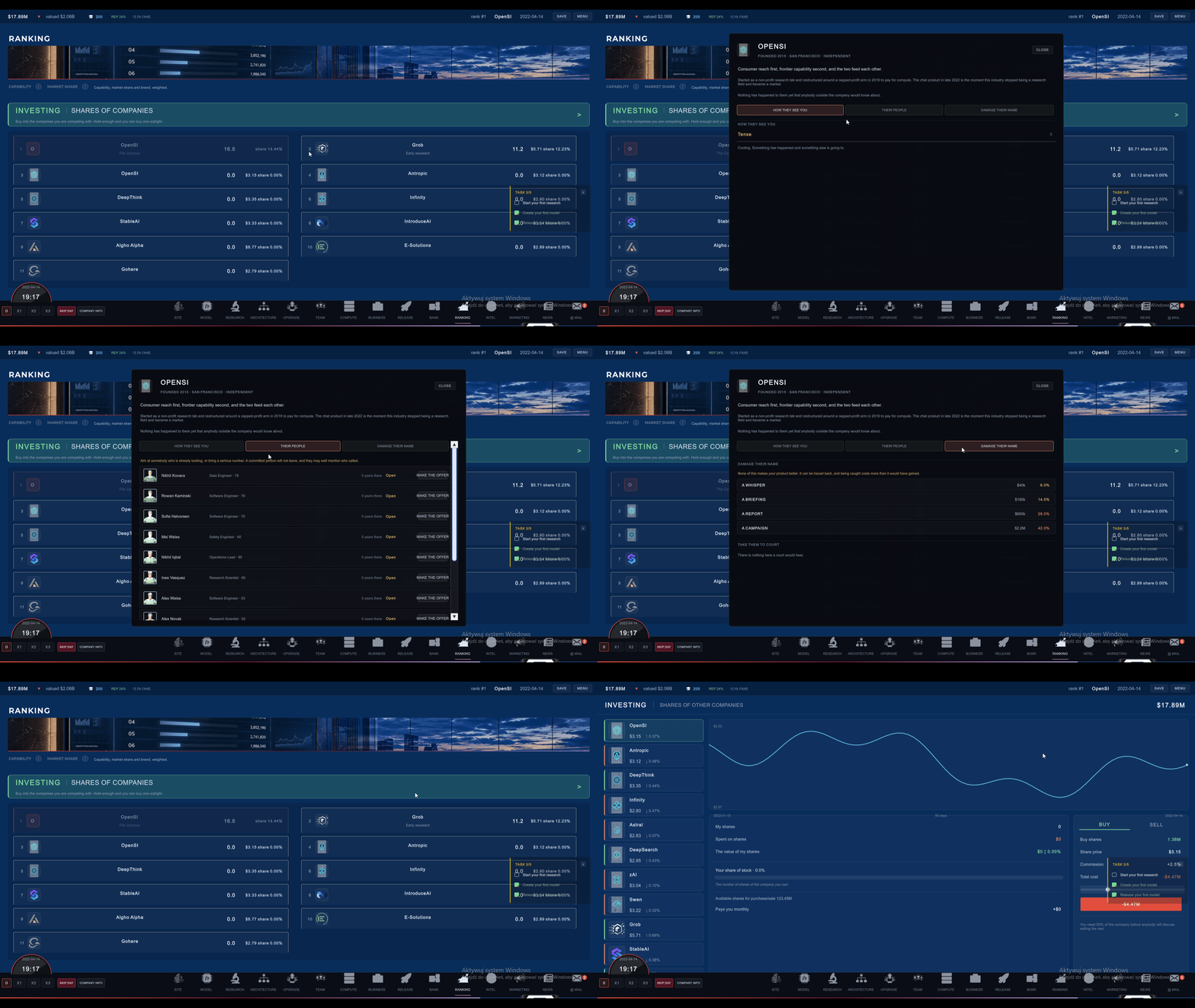
THE LABS YOU ARE RUNNING AGAINST
Fourteen of them, each with a dated history you can open. Three come apart during the campaign, and the reasons are your own exposures: a data question that lands in court eighteen months late, a team a cloud vendor hires away, a bill nobody worked out how to pay.
A dossier opened in 2023 cannot mention a 2024 collapse, and no individual person is ever named. Anything the game invents rather than records carries a projection flag, which includes the one lab that is not based on a real company at all.
WHAT THIS FIRST BUILD IS, HONESTLY
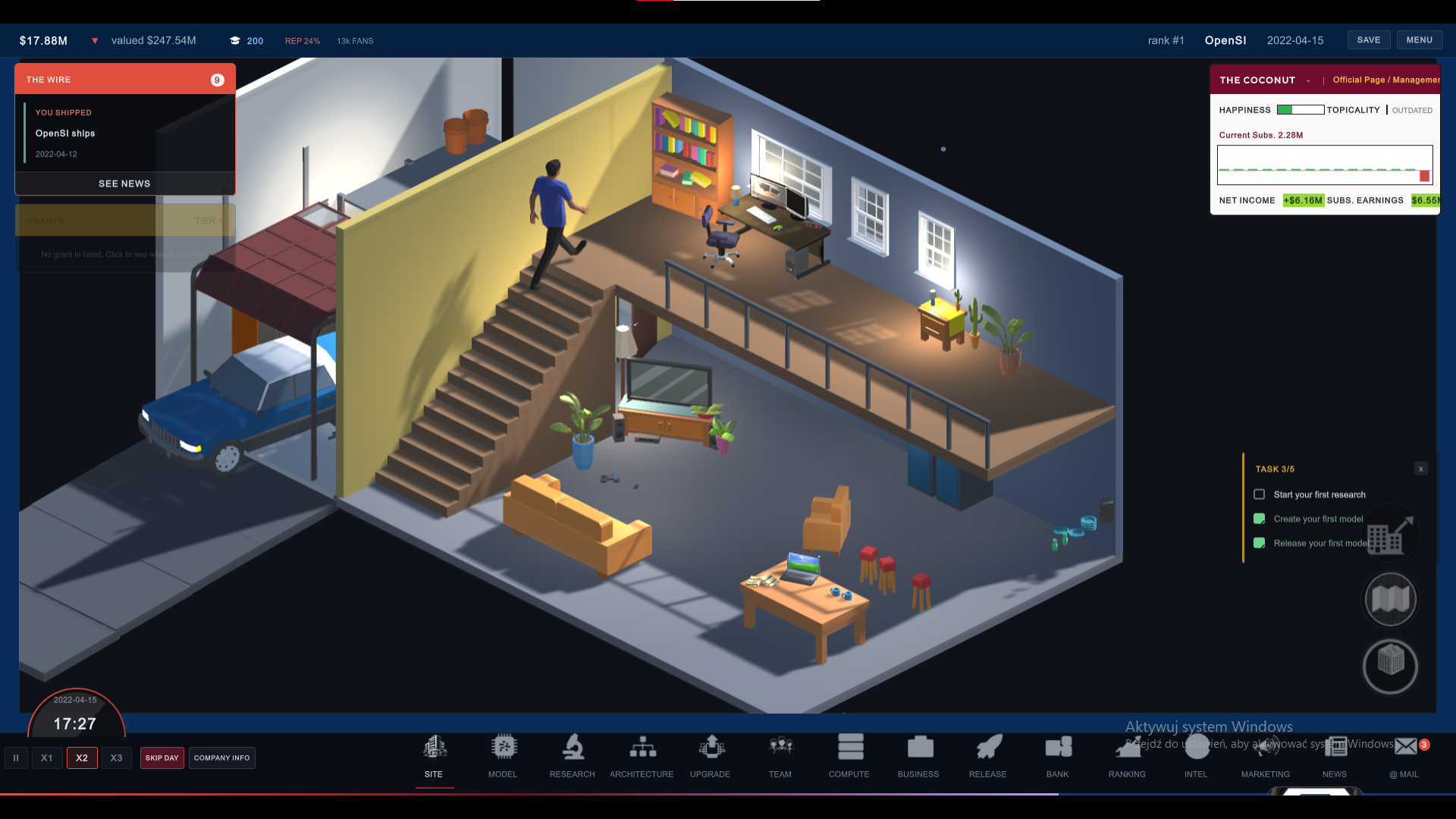
An alpha. The art is partial, several screens are still plain, and the world map in character creation is a placeholder I do not like. It plays end to end:
the cold open, a tutorial that walks the opening hour, the creator, fifty research nodes, a server room you fill yourself, and a company that is either still trading in 2026 or is not.
English and Polish, switchable at any time. 888 automated tests across 88 files, and 21 more that load a scene and photograph it.
One plays a full campaign and fails if a reasonable player cannot survive it. Tests are not a flex: the save format has changed under a live game forty-four times without breaking a campaign to add a feature, and that number is only possible because of them.
WHAT IS BEING BUILT NEXT, AND IS NOT IN THIS BUILD
A city. A surveyed blockout across 2048 metres, houses on real subdivided plots with driveways to their own garages, because a real neighbourhood is parcelled and randomness never produces that.
A downtown grid, a gallery, parks, four bridges. Offices you rent before you can buy them, on floors you furnish yourself.
The map is where the company physically exists. It is not decoration, it is not in this build, and I would rather say that here than have you go looking for it.
BUILT IN PUBLIC SINCE 2 AUGUST 2026
173 commits, every one public. 99,872 lines of C#. I post three times a week whether the week went well or not.
What I plan on Monday, one bug opened up properly on Wednesday, what shipped and what it cost on Friday.
The mistakes are not edited out, including the four bug reports that turned out to be one bug, and the twelve complete mechanisms I found that a player could not reach at all.
I build with AI assistance and I say so. Here is the honest cost of it: it makes writing a function that satisfies a description much faster, and does nothing for whether anything ever calls that function.
That is why there is now a script that checks.
WHO IS MAKING IT
Marcin Firmuga, 22, from Radom in Poland. I drive a taxi ten to twelve hours a day and build in the evenings. Before that a plastics repair shop, before that a warehouse in the Netherlands, on a forklift.
The same system for eighteen months. Work by day, code by night.
 Alongside this I build PC Workman, a Windows system monitor with a fully local assistant, on the Microsoft Store since July. The build is free and the code is public.
If you play it, the one thing worth telling me is the exact moment you got confused. There is a link inside the game for it, and it is worth more to me right now than a hundred downloads nobody opens.
Code: https://github.com/HuckleR2003/ScalingLaws-AI
Everywhere else: https://linktr.ee/marcin_firmuga

Download
Development log
- It should have shipped a month ago3 days ago
Comments
Log in with itch.io to leave a comment.
Damn, interface is nice I thought it would be harder.
Idea for this kind "advanced" tycoon game is badass.
From me: Sometimes you come across a bit of text in the wrong language.
Autosave feature doesn't work, it would be good to have the option to choose between loading a manual save and an autosave (just marked)